They are a wholegrain option
Mayo's MASLD diet guidance includes oatmeal within its wholegrain category. Choosing wholegrain staples is consistent with the wider Mediterranean-style direction used throughout this site.
Food question
Plain oats and porridge can fit very well within a MASLD eating pattern. Current Mayo Clinic guidance includes oatmeal among wholegrain foods, while NHS guidance recommends porridge and whole oats as practical higher-fibre breakfast choices. The important part is the whole bowl — especially what you add to it.
General information, not personalised medical advice. If you have diabetes, coeliac disease, food allergy, kidney disease or a prescribed eating plan, individual advice can change which oats, portions and toppings suit you.
The quick answer
Mayo Clinic's current MASLD diet guidance tells readers to choose 100% whole grains and specifically lists oatmeal among examples such as wholegrain bread, rice, pasta and tortillas. NHS guidance similarly recommends plain porridge with fruit and whole oats with fruit and lower-sugar yoghurt as practical breakfast options.
The NHS fibre guidance also identifies porridge oats as a useful higher-fibre cereal choice. These are not statements that oats directly treat fatty liver. They place oats inside the broader pattern that matters for MASLD: more minimally processed plant foods and wholegrains, and fewer highly refined or sugar-heavy defaults.
Why they fit
None of these makes oats a medicine. They simply explain why plain oats are an easy food to build around.
Mayo's MASLD diet guidance includes oatmeal within its wholegrain category. Choosing wholegrain staples is consistent with the wider Mediterranean-style direction used throughout this site.
NHS fibre guidance specifically recommends porridge as a higher-fibre cereal choice and notes that oats are a source of fibre. Fibre-rich foods can help make an eating pattern more filling and plant-forward.
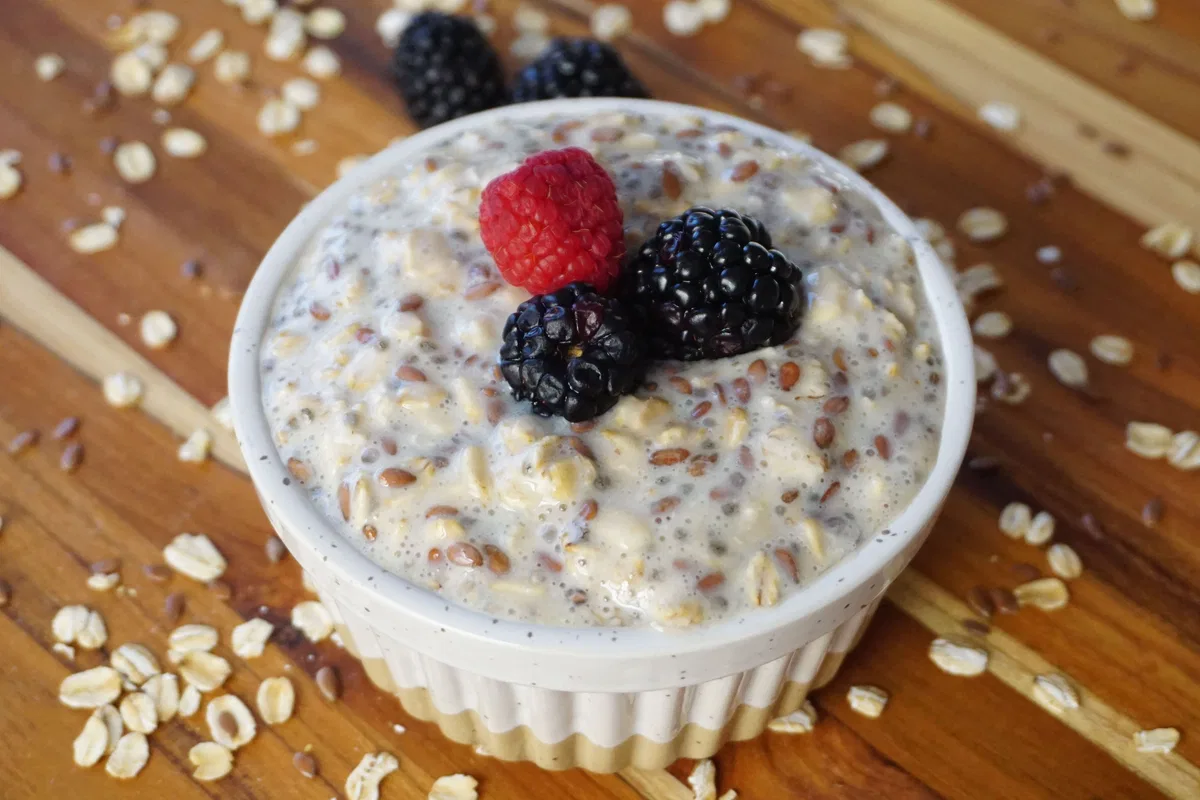
Fruit, berries, plain yoghurt, nuts and seeds can turn a basic bowl into a more varied breakfast. Our own overnight-oats and porridge recipes show practical examples without assigning a medical score to the meal.
Porridge can be cooked with water or milk, prepared overnight, eaten hot or cold and flavoured without needing specialist products. That makes it easier to repeat a healthy pattern in real life.
Build a better bowl
The biggest difference is often not rolled versus jumbo oats. It is whether the finished bowl remains a simple wholegrain breakfast or turns into a dessert by default.
Rolled, jumbo or instant?
Rolled oats, jumbo oats and steel-cut oats differ in texture and cooking time, but they can all be used as relatively simple oat foods. Instant products deserve a closer label check because some are sold with added sugars, syrups or flavourings already mixed in.
There is also no evidence-based reason for this site to tell everybody with MASLD to buy an expensive branded "liver porridge". Plain supermarket oats are enough to build an ordinary breakfast around.
The Food Lookup gives quick pattern-level guidance for 50 everyday foods and drinks.
Common questions
Plain porridge is a practical wholegrain, higher-fibre breakfast option and can fit well within a MASLD eating pattern. It should not be described as a treatment for fatty liver.
Yes. Overnight oats use the same basic grain in a different preparation. Choose plain ingredients and build flavour with fruit, yoghurt, nuts, seeds or spices rather than relying on lots of added sugar.
Nothing needs to be universally banned, but large amounts of table sugar, syrups, chocolate spreads, sweetened granola or dessert toppings can make the bowl much more sugar-dense. Make those less routine rather than treating oats as automatically healthy regardless of toppings.
Plain oats make it easier to control added sugar and usually provide a straightforward wholegrain base. Breakfast cereals vary widely, so compare labels rather than judging only by the word "cereal".
This page does not claim that. The evidence-led recommendation is to improve the overall dietary pattern. Oats are one convenient wholegrain food that can help build that pattern.
Evidence & sources
This page prioritises current clinical and NHS dietary guidance. It does not infer a liver-treatment effect from general oat nutrition research.