It is mainly an unsaturated fat
NHS guidance recommends replacing some saturated fat with unsaturated fat. Olive oil is one familiar plant-oil option for that swap.
Food question
Olive oil can fit well within a MASLD eating pattern, especially when it replaces butter, lard or other sources of saturated fat. Current NHS MASLD guidance specifically recommends olive oil within Mediterranean-style eating, while broader NHS advice classifies olive oil as an unsaturated fat. The useful point is the swap and the overall eating pattern — not treating olive oil as a medicine.
General information, not personalised medical advice. Your energy needs, weight goals, diabetes treatment, gallbladder or digestive problems and any prescribed diet can change what is appropriate for you.
The quick answer
York and Scarborough Teaching Hospitals NHS Foundation Trust includes small amounts of olive oil in its Mediterranean-style MASLD guidance and advises using olive oil instead of butter or lard for cooking, spreads and dressings. Bradford Teaching Hospitals NHS Foundation Trust gives the same practical message: focus on unsaturated fats and replace butter, lard and ghee with plant oils such as olive or rapeseed oil.
Mayo Clinic's current MASLD diet guidance also places olive oil within a Mediterranean pattern and recommends healthy unsaturated oils in place of butter or margarine. General NHS Eatwell guidance adds the important portion point: olive oil is an unsaturated fat, but all fats are high in energy and should be used in small amounts.
Why it can fit
The strongest case is about fat quality and food substitution, not a single-food cure claim.
NHS guidance recommends replacing some saturated fat with unsaturated fat. Olive oil is one familiar plant-oil option for that swap.
Current MASLD guidance repeatedly uses Mediterranean-style eating as a practical pattern, with vegetables, wholegrains, pulses, fish, nuts and modest amounts of olive oil.
Changing a knob of butter or spoonful of ghee to a measured amount of olive oil is more meaningful than simply pouring extra oil onto an already energy-dense meal.
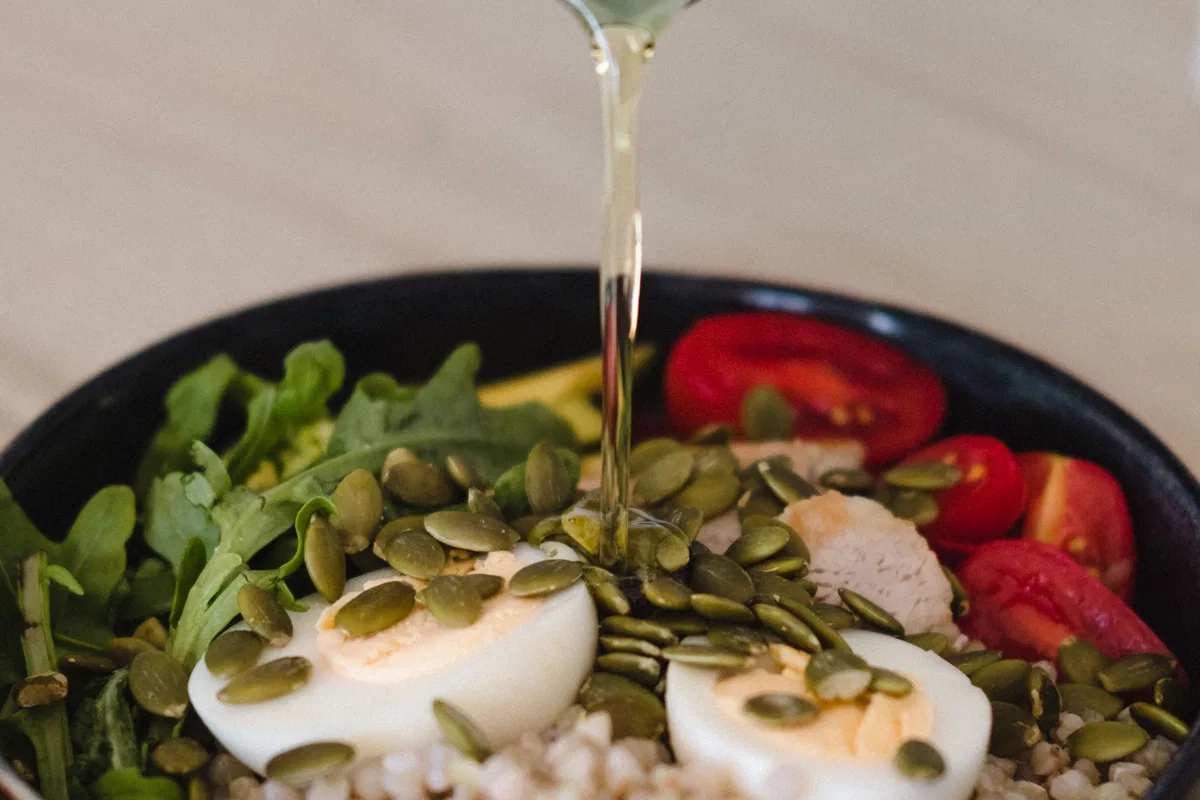
A small amount can dress a salad, roast vegetables, cook a traybake or finish beans and wholegrains, making it easy to use within familiar meals.
In the kitchen
You do not need a special morning shot of oil, an expensive “detox” blend or a rigid tablespoon target. The most useful approach is to decide where olive oil can replace a less suitable fat and to keep the amount visible.
Extra virgin or regular?
Extra-virgin olive oil is less refined and contains naturally occurring plant compounds, but current practical MASLD guidance is much clearer about the overall dietary pattern and replacing saturated fat than it is about prescribing a particular grade of olive oil.
If you enjoy extra-virgin olive oil for dressings or finishing dishes, it can be a useful option. Regular olive oil can also be used in cooking. The bigger decisions are how much oil you use, what it replaces and what the rest of the meal looks like.
The Plate Builder helps you put vegetables, wholegrains and protein around the meal instead of focusing on one ingredient.
Common questions
For most people, yes. NHS MASLD guidance specifically includes olive oil within Mediterranean-style eating and recommends it as a replacement for butter or lard. Individual advice may differ if another medical condition affects your diet.
Extra-virgin olive oil can fit well, but this page does not claim that one grade of olive oil treats MASLD better than another. The broader priorities are overall diet quality, appropriate energy intake and replacing saturated fats where useful.
There is no universal MASLD dose. NHS Eatwell guidance reminds people that all fats are high in energy and should be eaten in small amounts. Bradford's MASLD advice gives measuring oil with a teaspoon as one practical strategy.
As a fat-quality swap, current NHS guidance favours unsaturated oils such as olive oil over saturated-fat sources such as butter, lard and ghee. That is different from saying olive oil is calorie-free or unlimited.
Do not assume that. MASLD management is based on the wider dietary pattern, physical activity, weight management where appropriate and treatment of metabolic risk factors. Olive oil should not be presented as a stand-alone treatment or cure.
Evidence & sources
This page prioritises current clinical and NHS dietary guidance. It keeps the recommendation at food-pattern level and avoids turning observational or mechanistic research into a treatment claim.