Free recipe finder

Find a meal idea that fits today.

Filter practical breakfast, lunch, dinner and snack ideas by eating pattern, cooking time and main ingredient. This is a discovery tool — not a personalised diet prescription.

Important: the filters do not assess allergies, medicines, energy needs or other health conditions. Check ingredients yourself and follow any individual advice from your clinician or dietitian.
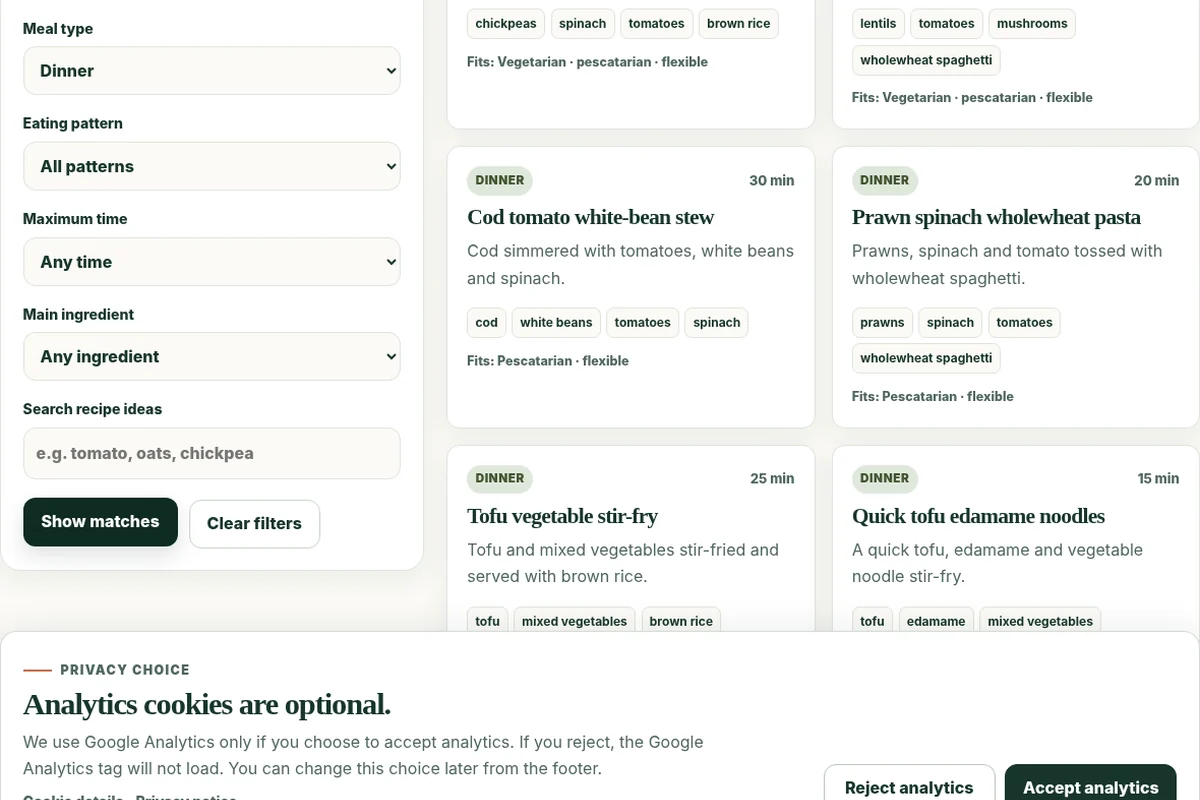
The Recipe Finder interface with meal and ingredient filters.
The Recipe Finder interface with filters and recipe results.

1 · Filter the ideas

What suits you today?

Leave any filter on “All” to keep the results broad.

2 · Matches

Recipe ideas

These are meal ideas rather than personalised nutrition recommendations.

How to use it

Use the filters to narrow choices, then adapt the idea.

Cooking time is an approximate preparation-and-cooking guide, not a guarantee. Brands, appliances and your own pace can change it. Swap ingredients to suit your budget, culture and preferences while keeping any allergy or medical restrictions in mind.

The finder deliberately avoids calorie targets and “good/bad food” scores. Overall dietary pattern matters more than pretending one recipe can treat liver disease.

Why these ideas lean Mediterranean-style

The starter set emphasises vegetables, wholegrains, legumes, nuts, seeds, fish and unsaturated-fat sources because current European MASLD guidance recommends improving overall diet quality in a direction similar to a Mediterranean dietary pattern.

It also avoids presenting sugary drinks or highly processed foods as everyday defaults.

Evidence basis

General food-quality guidance behind the finder

NHS

The NHS recommends a healthy, balanced diet and regular physical activity for people with NAFLD/MASLD.

Read NHS guidance

EASL–EASD–EASO guideline

The 2024 European guideline recommends improving diet quality towards a Mediterranean-style pattern while limiting ultra-processed foods rich in sugars and saturated fat and avoiding sugar-sweetened drinks.

Read the clinical guideline

NIDDK

NIDDK discusses healthy eating, portion awareness, unsaturated-fat choices and limiting foods and drinks high in simple sugars.

Read NIDDK guidance

Evidence checked: 17 August 2026. See our evidence and sources policy and medical disclaimer.