It is an oily fish
NHS guidance lists salmon among oily fish. Oily fish is one of the main dietary sources of long-chain omega-3 fatty acids.
Food question
Salmon can fit very well within a MASLD eating pattern. Current MASLD guidance favours a Mediterranean-style dietary pattern, while NHS guidance identifies salmon as an oily fish rich in long-chain omega-3 fats. That makes salmon a useful protein choice — but not a treatment for fatty liver on its own.
General information, not personalised medical advice. Pregnancy, breastfeeding, allergies, kidney disease, anticoagulant treatment or a prescribed diet can change the advice that applies to you.
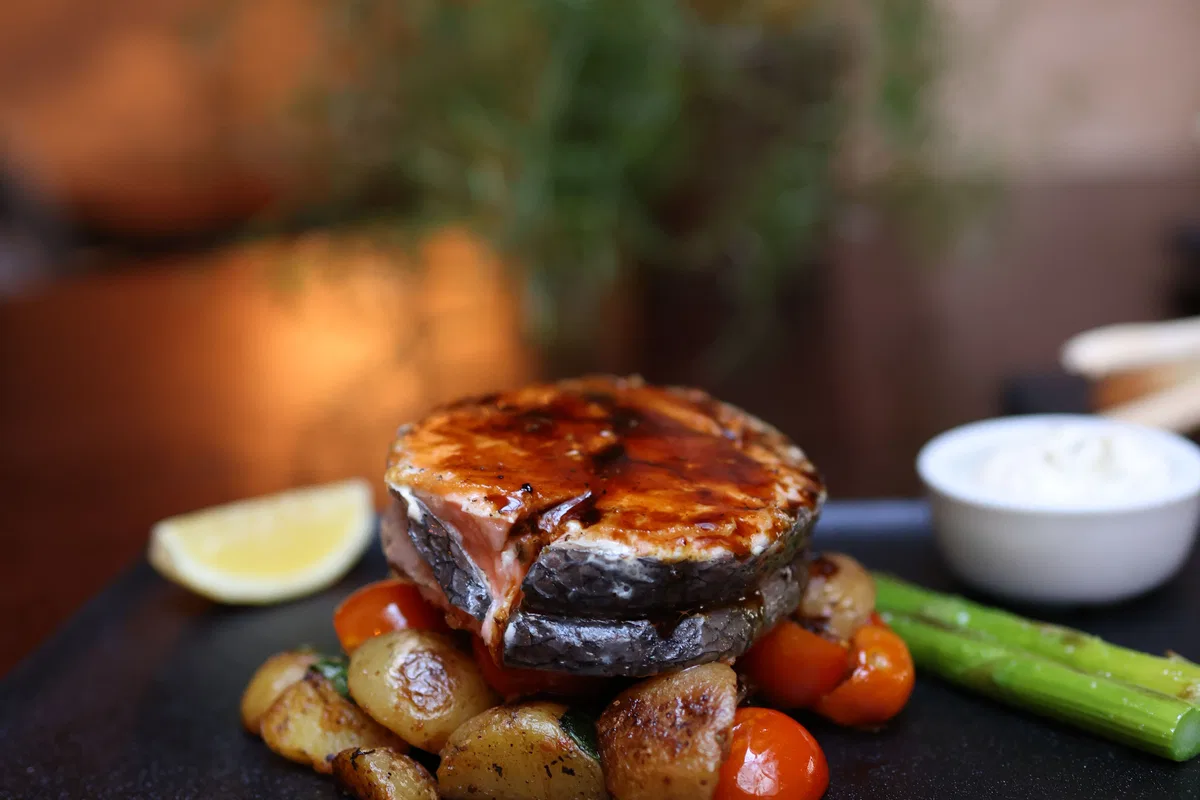
The quick answer
The 2024 EASL–EASD–EASO clinical guideline for MASLD recommends improving overall diet quality in a way similar to a Mediterranean dietary pattern and reducing highly processed foods, added sugars and sugar-sweetened drinks. It does not prescribe salmon as a medicine or guarantee that eating fish will remove liver fat.
Within that broader pattern, salmon is a sensible food to include. NHS guidance classifies salmon as an oily fish and notes that oily fish are particularly rich in long-chain omega-3 fatty acids. Mayo Clinic's current MASLD diet guide also includes fish and seafood and specifically names salmon among fatty cold-water fish high in omega-3.
Why it can fit
These are food-pattern reasons, not claims that salmon treats MASLD by itself.
NHS guidance lists salmon among oily fish. Oily fish is one of the main dietary sources of long-chain omega-3 fatty acids.
Using fish for some meals can make it easier to rely less often on processed meats and some higher-saturated-fat meat choices, while keeping a substantial protein component.
Salmon pairs easily with vegetables, beans, lentils, potatoes and wholegrains, so the full plate can stay balanced rather than becoming a protein-only meal.
NHS guidance notes that steamed, baked or grilled fish is a healthier choice than fried fish. Simple cooking methods keep the focus on the fish and the rest of the plate.
Make it practical
The useful question is not “How much salmon will cure fatty liver?” There is no evidence-based answer to that. A better question is how salmon can replace a less useful default and sit inside a balanced meal.
Fresh, frozen or canned?
Fresh and frozen salmon can both be practical choices. Frozen plain fillets keep longer and can reduce food waste. Canned salmon can also work in salads, sandwiches or fishcakes; if salt intake matters to you, compare labels.
Smoked salmon is different again. It can be useful in smaller amounts, but it is usually much higher in salt than a plain cooked fillet, so it should not be treated as nutritionally identical to unsmoked salmon.
Use the existing salmon traybake rather than trying to turn this evidence page into another recipe.
Common questions
For most people, yes. Salmon can fit within the Mediterranean-style dietary pattern recommended in current MASLD guidance. Individual clinical advice can differ if you have another condition or prescribed diet.
Using fish for some meals can be a useful way to reduce reliance on processed meat and some higher-saturated-fat meat choices. That does not mean red meat must be universally banned; frequency and the overall dietary pattern matter.
NHS guidance recommends at least two portions of fish each week, including at least one portion of oily fish, for the general population. Salmon is one oily-fish option. Some groups have additional limits, so check NHS advice if you are pregnant, breastfeeding or planning pregnancy.
Salmon remains salmon, but cooking method changes the meal. NHS guidance favours steaming, baking or grilling over frying because batter and frying can increase the fat and energy content.
This page does not make that claim. Clinical guidance focuses on overall diet quality, weight management where appropriate and wider lifestyle treatment. Salmon is one food that can help build that pattern.
Evidence & sources
This page prioritises current clinical guidance and NHS dietary advice. It deliberately avoids turning research on omega-3 or fish into a single-food treatment claim.