They are whole fruit
Bananas fit the fruit-rich side of the balanced and Mediterranean-style patterns recommended in current MASLD guidance.
Food question
Bananas can fit comfortably within a MASLD eating pattern as a normal whole fruit. Current NHS and Mayo Clinic guidance encourages fruit as part of a Mediterranean-style or balanced diet. A banana is not a treatment for fatty liver, and there is no need to label it a special liver-cleansing food.
General information, not personalised medical advice. Diabetes, kidney disease, medicines and individual dietary plans can change what is appropriate for you.
The quick answer
York Hospitals NHS guidance for MASLD recommends eating plenty of fruit and vegetables and specifically gives one banana as an example of a fruit portion. Bradford Teaching Hospitals likewise recommends a Mediterranean-style eating pattern focused on plant foods including fruit, vegetables, whole grains, nuts, seeds and pulses.
Mayo Clinic's current MASLD diet guidance recommends at least two servings of fruit daily and favours fresh, frozen or fruit canned in its own juice rather than fruit juice. That supports bananas as an ordinary whole-fruit choice, but it does not make bananas a treatment for MASLD.
Why they can fit
The strongest case for bananas is ordinary diet quality and convenience, not a special medicinal effect.
Bananas fit the fruit-rich side of the balanced and Mediterranean-style patterns recommended in current MASLD guidance.
Whole bananas retain fibre, unlike juice. Keeping fruit intact is one reason whole fruit is generally the simpler default.
Bananas are inexpensive, portable and need no preparation, which can make a healthier snack pattern easier to maintain.
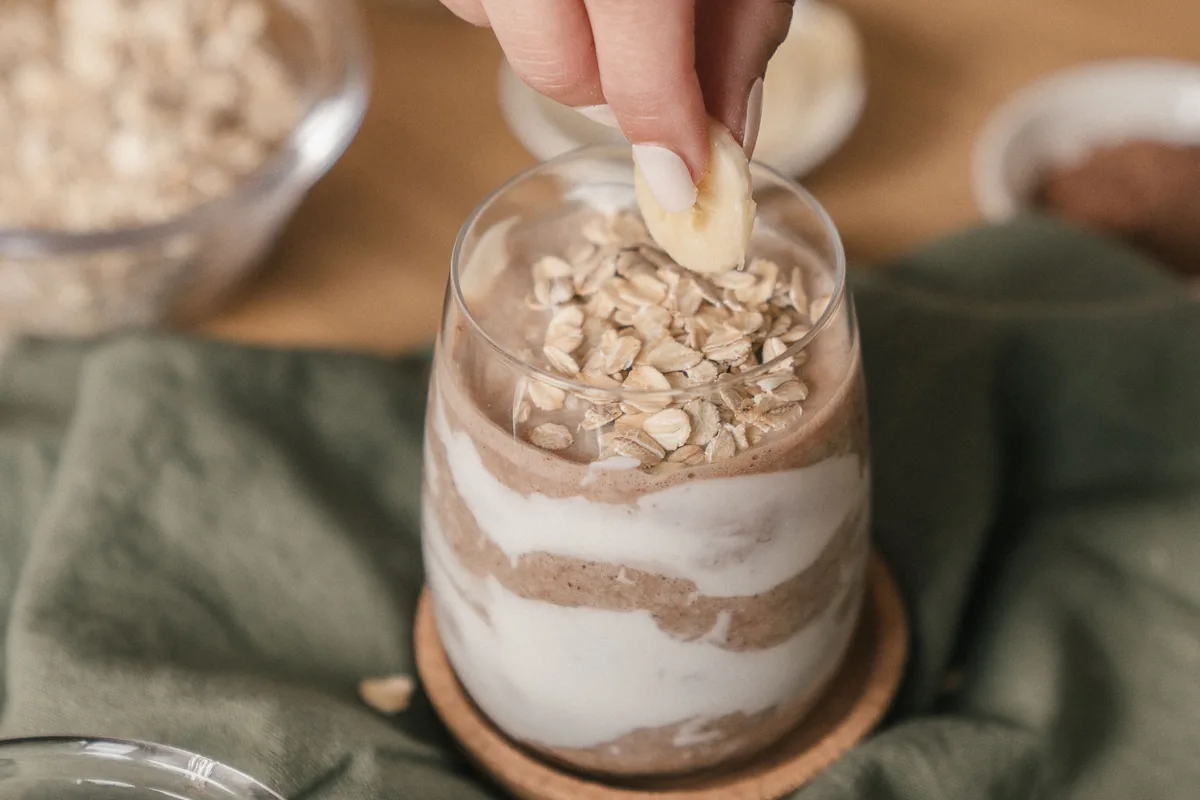
A banana can sit alongside oats, plain yoghurt, nuts or wholegrain toast rather than being treated as a stand-alone “liver food”.
Practical choices
Common concern
Whole fruit contains naturally occurring sugars, but it also comes with fibre, water and nutrients. Current NHS and Mayo MASLD guidance still includes fruit within the recommended dietary pattern rather than asking people to avoid it because of its natural sugar content.
If you manage diabetes and have been given individual carbohydrate targets, follow that advice. The right question is often how a banana fits your total meal or snack, not whether the fruit is universally allowed or forbidden.
Common questions
For many people, a banana can be one of the day's fruit portions. Variety across fruits and vegetables is still useful, and individual medical advice takes priority.
Current guidance does not tell people with MASLD to avoid whole fruit because of naturally occurring sugar. It more consistently advises limiting sugary drinks and choosing whole fruit.
They can fit, but whole fruit is generally easier to keep in context. Smoothies can be consumed quickly and may include juice, syrups or other added sugars.
No. Bananas do not reverse MASLD. Management focuses on the overall dietary pattern, physical activity and cardiometabolic risk factors, with weight management where clinically appropriate.
Evidence & sources