1
Vegetables and salad
Use fresh, frozen or tinned vegetables to make meals easier to repeat. Aim for variety across the week rather than chasing a particular “best” vegetable.
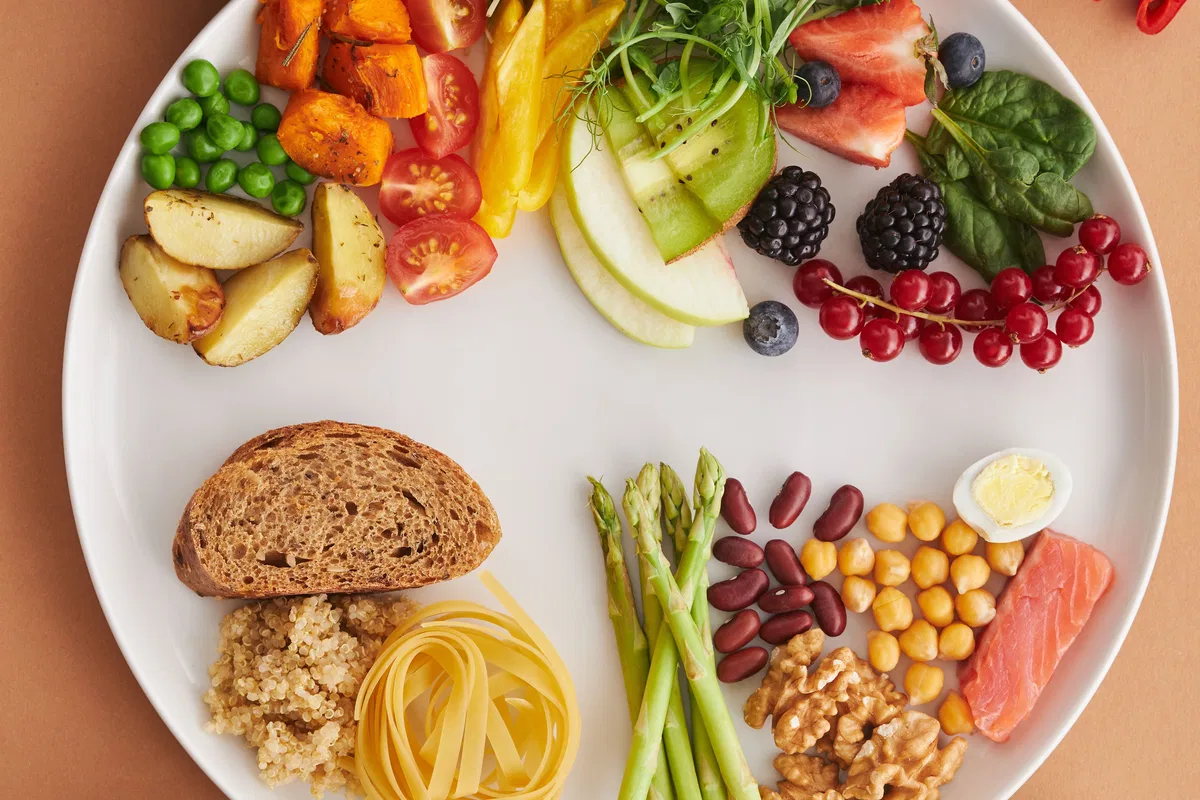
Easy choices: broccoli, peppers, tomatoes, spinach, carrots, peas, cauliflower, cabbage, mushrooms, green beans and mixed frozen vegetables.
2
Whole fruit
Whole fruit can fit a balanced eating pattern and provides fibre as well as vitamins and minerals. Whole fruit is a different choice from sugary drinks and fruit juice.
Easy choices: berries, apples, pears, oranges, kiwi, peaches, plums and bananas.
3
Beans, lentils and pulses
Pulses are useful because they can provide protein and fibre together. They work in soups, curries, chilli, salads, pasta sauces and tray bakes.
Easy choices: chickpeas, kidney beans, black beans, butter beans, green or red lentils and reduced-salt baked beans. See the beans & fatty liver guide for canned-bean and portion context.
4
Wholegrain and higher-fibre starches
Wholegrain or higher-fibre versions of bread, oats, rice and pasta are useful everyday choices where they suit the meal. Potatoes can also form part of balanced meals, especially when preparation and portions are sensible.
Easy choices: porridge oats, wholemeal bread, brown or mixed-grain rice, wholewheat pasta, barley and potatoes with their skins.
5
Protein foods
There is no need for every meal to revolve around meat. Rotate plant and animal protein sources according to your preferences and any advice from your healthcare team.
Easy choices: beans, lentils, tofu, eggs, fish such as salmon, skinless poultry, plain yoghurt and other suitable lower-sugar dairy or alternatives.
6
Nuts, seeds and unsaturated fats
Current European guidance includes nuts, seeds and olive oil within a Mediterranean-style pattern. They are nutrient-dense, so they can be useful without needing to be eaten in unlimited amounts.
Easy choices: walnuts, almonds and other unsalted nuts, pumpkin seeds, chia seeds, olive oil, rapeseed oil and avocado.