Start with the grain
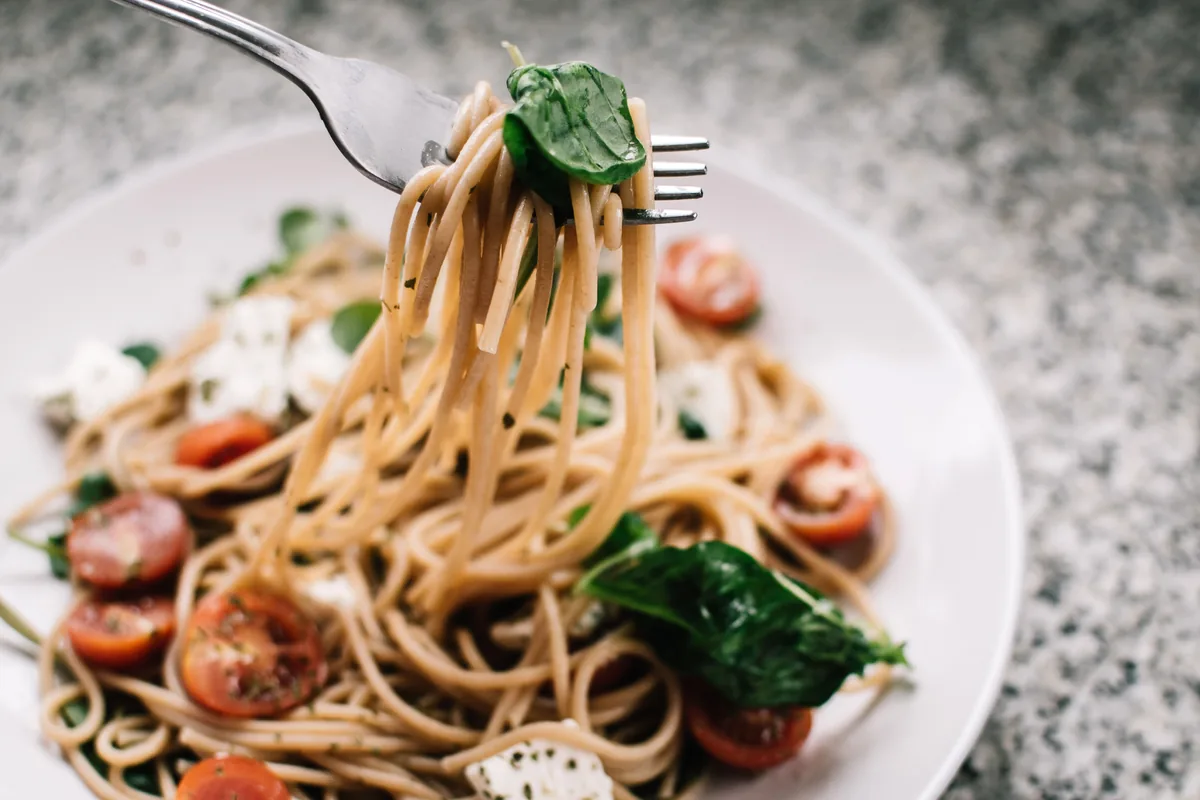
Wholewheat and other wholegrain pasta usually provide more fibre than white pasta. They are a useful everyday option when you like them, but they are not a requirement for every meal.
Food question
Pasta does not need a blanket ban in a MASLD eating pattern. Wholewheat or wholegrain pasta is a useful way to add more fibre, but the sauce, vegetables, protein and overall portion often determine whether the finished bowl is well balanced.
General information, not personalised medical advice. Your needs may differ if you have diabetes treatment, kidney disease, digestive conditions or a prescribed diet.
What the guidance says
Several current UK liver-diet resources land on the same practical point: pasta can remain a normal starchy food, while wholegrain versions are useful when you want more fibre. York and Scarborough Teaching Hospitals recommends wholegrain pasta, rice and bread; Bradford Teaching Hospitals includes pasta among starchy carbohydrates and favours wholegrain choices; Cambridge University Hospitals lists brown rice and pasta among higher-fibre foods.
The evidence therefore supports a food-quality swap, not a fear-based rule. Wholegrain pasta is a sensible default for many meals, but white pasta is not “toxic” and changing the grain alone is not a treatment for MASLD.
Look beyond the pasta shape
Pasta is rarely eaten on its own. Grain choice matters, but sauce, vegetables, protein and how much space pasta takes on the plate can change the meal far more than the word “pasta” on the menu.
Wholewheat and other wholegrain pasta usually provide more fibre than white pasta. They are a useful everyday option when you like them, but they are not a requirement for every meal.
If pasta fills nearly the whole bowl, vegetables and protein can get squeezed out. A practical approach is to decide on those other components first and use pasta to complete the meal.
Beans, lentils, fish or chicken can turn pasta from a carbohydrate-heavy dish into a more balanced mixed meal, especially when vegetables are built into the sauce or served alongside.
A tomato, vegetable, herb or pulse-based sauce has a very different profile from one built around cream, butter, large amounts of cheese or processed meat. Judge the finished dish rather than pasta in isolation.
Practical pasta upgrades
Common confusion
No. Wholegrain pasta is the higher-fibre choice highlighted in current guidance, but that is not the same as a medical ban on white pasta. Cost, availability, digestive tolerance and what the rest of the meal looks like all matter.
If you prefer white pasta, make the meal stronger elsewhere: add vegetables, include a protein source and keep rich sauces from becoming the automatic choice. You can also alternate with wholewheat pasta rather than making an all-or-nothing switch.
Common questions
Because wholegrain pasta generally contains more fibre than white pasta. That makes it a useful grain choice within the wider diet, not a treatment for MASLD.
No. A white-pasta meal can still be built sensibly. The useful questions are what else is in the bowl, how often rich sauces feature and whether higher-fibre choices appear elsewhere in your diet.
No useful guidance ranks those staples in a universal order. Wholegrain versions are commonly favoured, but the finished meal and your overall eating pattern matter more than a simple league table.
No. Changing one grain cannot reverse MASLD by itself. Management is based on the broader dietary pattern, physical activity, cardiometabolic risk factors and weight change where clinically appropriate.
Evidence & sources