Cooking method
Boiling, baking and lightly roasting are easier ways to keep added fat modest. Deep-fried chips and fries are a different food context because the cooking method adds substantial fat and often salt.
Food question
Potatoes can fit a MASLD eating pattern, but preparation, portion and the rest of the plate matter. UK NHS guidance includes potatoes among normal starchy carbohydrate foods and suggests keeping the skins on for more fibre. Some current MASLD guidance is more cautious about starchy vegetables, so potatoes are best treated as the carbohydrate part of a balanced meal rather than an unlimited vegetable.
General information, not personalised medical advice. If you use glucose-lowering medicines or insulin, have kidney disease, or follow a prescribed diet, your carbohydrate and potassium needs may differ.
The quick answer
Bradford Teaching Hospitals' MASLD guidance includes potatoes alongside bread, rice and pasta as starchy carbohydrates on which meals can be based. General NHS guidance says potatoes are a useful starchy food and recommends boiled, baked, mashed or roasted versions with only small amounts of fat or oil and no added salt. It also suggests leaving skins on where possible to retain more fibre.
Mayo Clinic's current MASLD diet guidance is more cautious and advises limiting starchy vegetables such as potatoes while emphasising non-starchy vegetables. That difference is a good reason not to turn one food into a universal rule: the overall dietary pattern, portion, preparation and individual metabolic needs matter.
More useful than “good” or “bad”
The same potato can end up in very different meals. Cooking method, toppings and what sits beside it often matter more than the fact that the food is a potato.
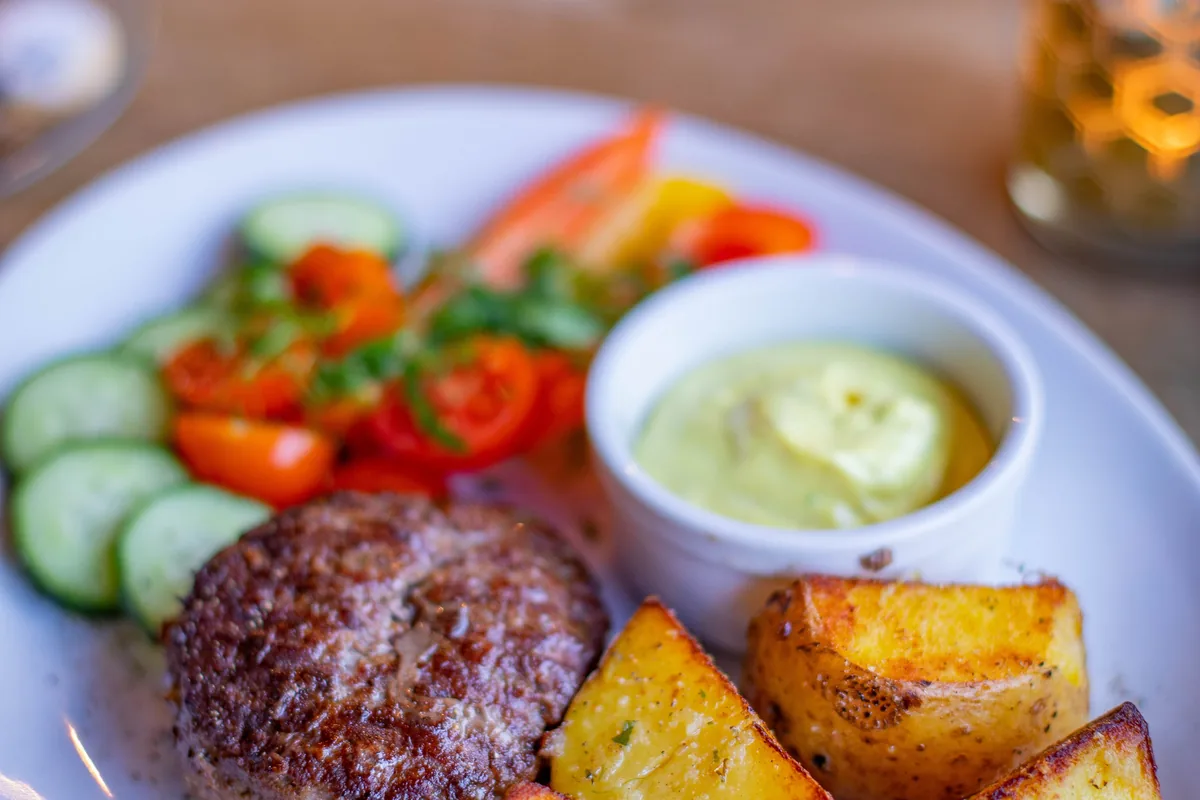
Boiling, baking and lightly roasting are easier ways to keep added fat modest. Deep-fried chips and fries are a different food context because the cooking method adds substantial fat and often salt.
The NHS recommends leaving potato skins on where possible to retain more fibre and vitamins. A jacket potato with its skin is therefore different from a peeled, highly processed potato product.
Potatoes are generally used as the starchy carbohydrate part of a UK meal, not as one of the non-starchy vegetables. A sensible plate leaves substantial room for vegetables and protein.
Butter, cream, cheese, processed meats and salty sauces can quickly change the meal. Beans, vegetables, fish, chicken, yoghurt-based toppings or a small amount of olive oil can create a different overall pattern.
Practical swaps
Common confusion
No universal MASLD rule says everyone must eliminate potatoes. UK NHS MASLD guidance includes them as a normal starchy carbohydrate. However, because potatoes are starch-rich, portion and meal context deserve attention, particularly if blood-glucose management is also part of your care.
If you are choosing between a baked potato with beans and salad and a large portion of deep-fried chips, the preparation and rest of the meal create very different nutritional contexts.
Common questions
A jacket potato can fit well, especially with the skin eaten and a balanced topping such as beans, tuna, vegetables or a modest amount of lower-fat yoghurt. The topping and portion matter too.
They do not need to become a forbidden food, but deep-fried chips are less aligned with the usual guidance than boiled, baked or lightly roasted potatoes. Keep them less routine rather than treating them as equivalent.
Yes. NHS guidance suggests using lower-fat milk rather than cream if you want to reduce saturated fat. Portion and what you serve with the mash still matter.
No. Potatoes do not reverse MASLD. Management focuses on the overall eating pattern, physical activity and cardiometabolic risk factors, with weight change where clinically appropriate.
Evidence & sources