Beans, lentils & chickpeas
Use them in chilli, curry, soup, pasta sauces, salads and wraps. They bring both protein and fibre and are easy to batch-cook or buy tinned.
Seven meat-free days built around variety
A vegetarian MASLD meal plan can fit the same evidence-led healthy-eating principles as any other balanced plan. The important part is not simply removing meat: it is replacing it with a useful variety of pulses, tofu or tempeh, eggs or dairy if you use them, nuts and seeds, alongside vegetables, wholegrains or other higher-fibre staples and mainly unsaturated fats.
This is a general lacto-ovo vegetarian worked example, not personalised medical nutrition therapy. Vegan swaps are included where practical, but a fully vegan diet needs reliable sources of nutrients such as vitamin B12. If you have diabetes, kidney disease, advanced liver disease, pregnancy, food allergies, unplanned weight loss or other clinical dietary needs, seek individual advice.
The quick answer
Yes. Current European MASLD guidance recommends improving overall diet quality in a direction similar to a Mediterranean dietary pattern, limiting ultra-processed foods rich in sugars and saturated fat, and avoiding sugar-sweetened drinks. A vegetarian eating pattern can fit those principles well when it includes plenty of vegetables, fruit, wholegrains, legumes, nuts, seeds and mainly unsaturated fats.
NHS vegetarian guidance makes an equally important point: a meat-free diet still needs variety. Beans, peas and lentils provide protein and fibre; eggs, tofu, tempeh and mycoprotein can provide other protein options; dairy foods or fortified alternatives can contribute calcium and, depending on the product, vitamin B12. Iron and B12 deserve particular attention when animal foods are limited.
Protein without meat or fish
Using a mixture makes meals less repetitive and helps cover different nutrients.
Use them in chilli, curry, soup, pasta sauces, salads and wraps. They bring both protein and fibre and are easy to batch-cook or buy tinned.
Useful for stir-fries, traybakes and bowls. Compare labels on more processed meat substitutes because salt and saturated fat can vary widely.
If you eat them, eggs, plain yoghurt, milk and modest amounts of cheese can add protein. Choose lower-sugar yoghurt and compare saturated fat where useful.
Nuts and seeds can add protein and unsaturated fats. Unsweetened fortified plant drinks or yoghurts can help when dairy is limited or avoided.
Nutrients worth planning
Pulses, wholemeal bread, fortified cereals, nuts and dark green vegetables can provide iron. NHS guidance notes that iron from plants is absorbed less easily than iron from meat, so including vitamin-C-rich foods such as peppers, tomatoes, citrus fruit or berries with meals can be useful.
B12 occurs naturally in animal foods. If you regularly eat eggs and dairy you may obtain it there; if you eat little or none, use appropriate fortified foods and seek advice if you are unsure whether supplementation is needed.
The worked week
Snacks are optional. Portions should fit your own needs rather than a universal calorie target.
Porridge with berries, plain yoghurt or fortified soya yoghurt, and a small spoonful of chopped walnuts or seeds.
Wholemeal wrap with hummus, chickpeas, tomato, cucumber, grated carrot and leafy salad.
Lentil-and-vegetable tomato sauce with wholewheat pasta and steamed broccoli or another green vegetable.
Apple or pear with a small handful of unsalted nuts.
Prep move: cook extra lentil sauce for Day 2 lunch and freeze another portion if that helps.
Wholemeal toast with scrambled egg, grilled tomatoes and spinach. Vegan swap: scrambled calcium-set tofu.
Leftover lentil tomato sauce over a baked potato or with wholemeal toast, plus a simple side salad.
Tofu and mixed-vegetable stir-fry with brown rice, ginger, garlic and a modest amount of lower-salt soy sauce.
Plain yoghurt or fortified plant yoghurt with fruit.
Prep move: cook extra brown rice and tofu-vegetable mixture for tomorrow's lunch.
Overnight oats with chopped apple, cinnamon, chia seeds and milk or an unsweetened fortified plant drink.
Leftover tofu-and-vegetable rice bowl with extra salad or steamed vegetables if available.
Chickpea, tomato and spinach curry with brown rice, plus cucumber with plain yoghurt or a fortified plant alternative.
Carrot and pepper sticks with hummus.
Prep move: make at least one extra portion of curry for Day 4 lunch.
Two eggs with mushrooms and spinach on wholemeal toast. Vegan swap: tofu scramble with the same vegetables.
Leftover chickpea and spinach curry with rice or a baked potato, depending on what needs using.
Kidney-bean and black-bean chilli with tomatoes, peppers and sweetcorn, served with a baked potato and crunchy cabbage slaw.
Pear, orange or another piece of fruit with a few nuts or seeds.
Prep move: save chilli for tomorrow's lunch and freeze any extra portion.
Plain yoghurt or fortified soya yoghurt with oats, fruit and pumpkin or sunflower seeds.
Leftover bean chilli in a wholemeal wrap with shredded lettuce, tomato and a spoonful of plain yoghurt if wanted.
Wholewheat pasta with cannellini beans, courgette, spinach, tomatoes, herbs and a drizzle of olive or rapeseed oil.
Orange or kiwi fruit with a small handful of unsalted nuts.
Iron pairing: tomatoes, greens and vitamin-C-rich fruit sit naturally alongside several plant-iron foods today.
Porridge with banana, cinnamon and a small spoonful of peanut butter or chopped nuts.
Wholemeal pitta with hummus, leftover salad vegetables and a side of fruit or plain yoghurt.
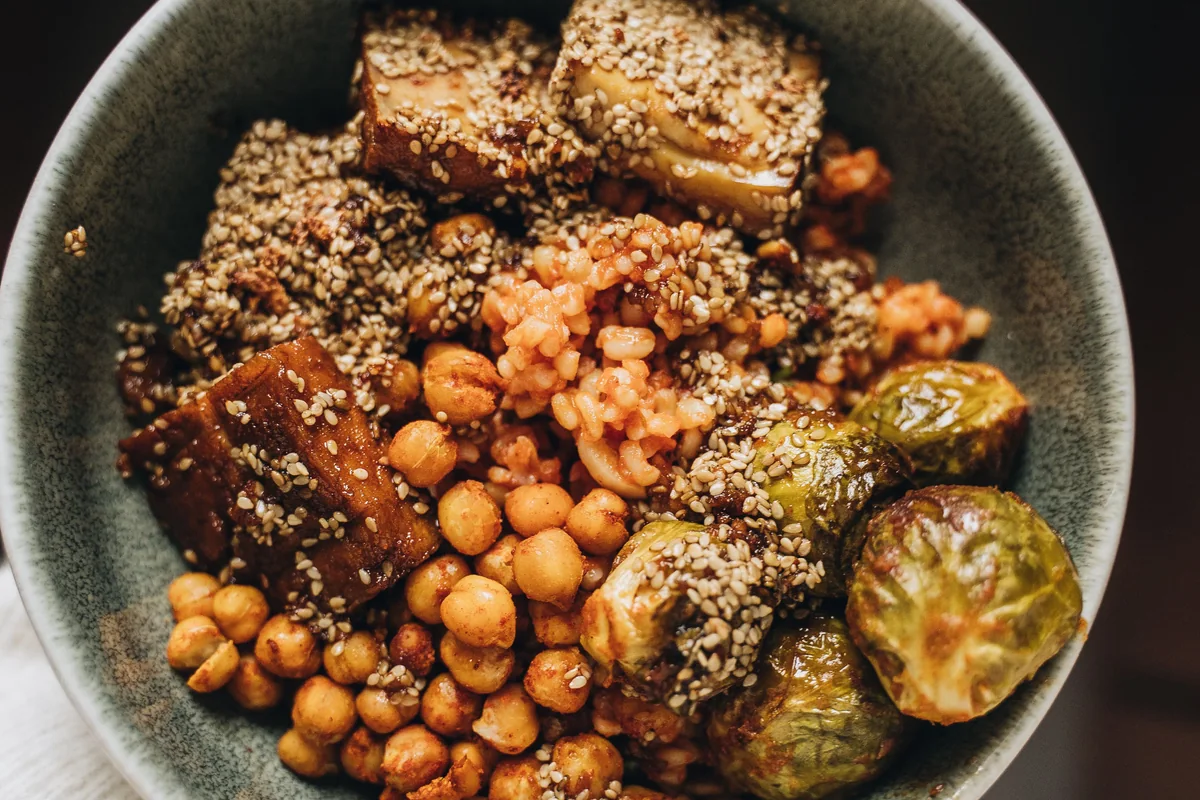
Traybake of chickpeas, potatoes, peppers, courgette and red onion with herbs, served with leafy greens and a yoghurt-herb or tahini-lemon dressing.
Fruit, plain yoghurt or a small handful of nuts depending on hunger.
Prep move: roast enough vegetables and chickpeas for tomorrow's lunch.
Scrambled eggs or tofu on wholemeal toast with mushrooms and tomatoes.
Leftover chickpea-and-vegetable traybake bowl with greens and any remaining yoghurt-herb or tahini dressing.
Lentil shepherd's pie with carrots, peas and onions under a potato topping, served with cabbage, broccoli or other green vegetables.
Plain yoghurt with berries, or fruit with walnuts or seeds.
Use-it-up move: the final dinner is designed to absorb leftover carrots, peas, onions, potatoes and lentils rather than opening a new set of ingredients.
Shopping backbone
Onions, carrots, peppers, tomatoes, cucumber, leafy greens, broccoli, courgette, mushrooms, potatoes, cabbage, bananas, apples, citrus fruit or seasonal alternatives. Frozen vegetables and berries are useful substitutes.
Lentils, chickpeas, kidney or black beans, cannellini beans, tofu, hummus, eggs if used, plain yoghurt or an unsweetened fortified alternative, plus nuts and seeds.
Oats, wholemeal bread or pittas, wholemeal wraps, brown rice, wholewheat pasta and potatoes.
Olive or rapeseed oil, herbs, spices, garlic, ginger, lemon, lower-salt soy sauce, peanut butter or tahini. You do not need a cupboard full of speciality “health” products.
Useful swaps
A practical plan should bend around preference, availability and leftovers.
Use tofu scramble, beans on wholemeal toast, hummus or yoghurt/fortified-alternative breakfasts instead.
Choose unsweetened calcium- and B12-fortified alternatives where suitable and check labels rather than assuming every plant product is fortified.
Swap in tempeh, edamame, beans, lentils or eggs if you eat them. The aim is protein variety, not loyalty to one ingredient.
They can be convenient, but compare salt, saturated fat and ingredient lists. Use them as one option rather than the foundation of every meal.
Keep planning
This page owns the vegetarian worked-week intent; the interactive tools handle custom filters and changes.
Select the vegetarian mode and change cooking-time preferences or snacks.
Filter specifically for vegetarian meal ideas before changing the week.
Check how individual foods generally fit into the wider eating pattern.
See the broader evidence-led pattern behind many of these plant-forward meals.
Evidence checked 18 August 2026
See our editorial policy, evidence policy and medical disclaimer.