Practical food guide

Foods to limit with fatty liver: what to make less routine

“Limit” does not mean you need a perfect diet or a permanent blacklist. The strongest current guidance is to make sugary drinks and heavily processed foods less routine, reduce foods high in added sugars and saturated fat, and build more meals from minimally processed foods.

General information for adults with MASLD/NAFLD. Your needs may differ if you have cirrhosis, diabetes, kidney disease, pregnancy, unplanned weight loss, an eating disorder or another condition affecting nutrition. Ask your healthcare team for individual advice where needed.

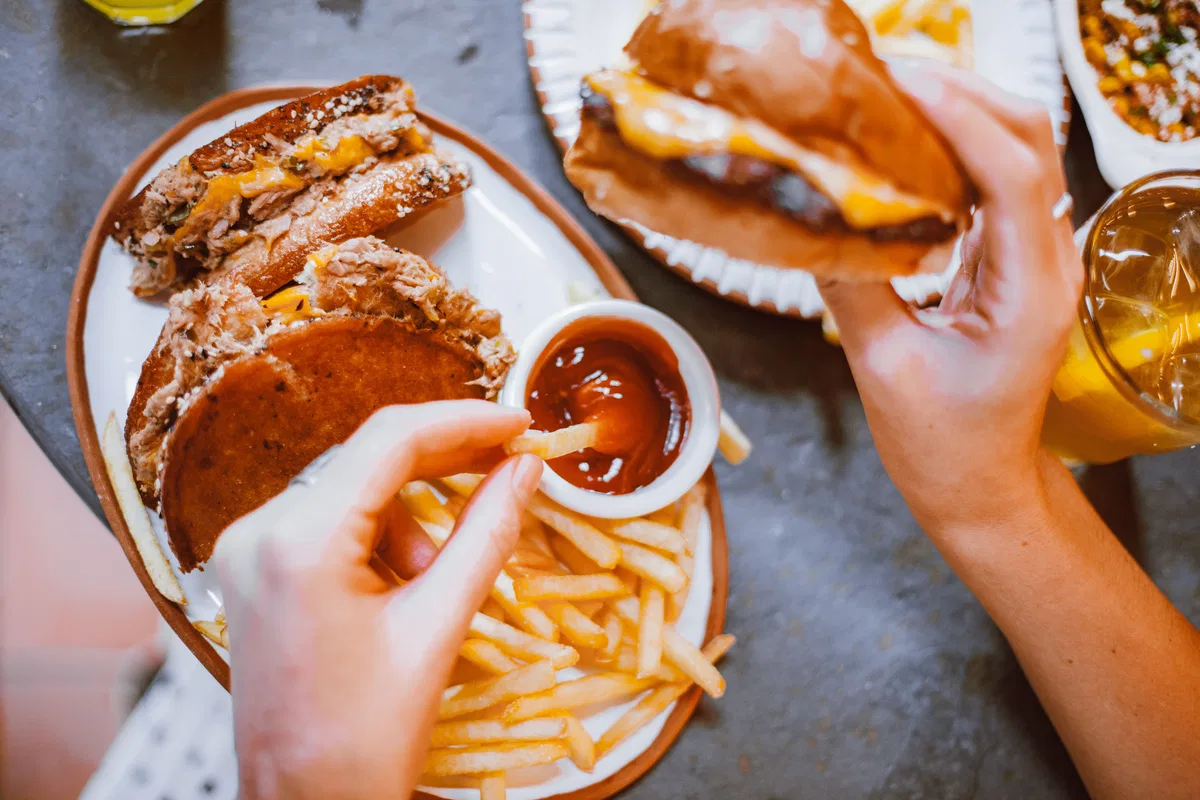
A burger, fries, pastries and other takeaway-style foods on a table.
“Limit” means making these foods less routine overall, not creating a permanent blacklist or judging an occasional choice.

The quick answer

What should you limit if you have fatty liver?

The 2024 European MASLD guideline recommends improving overall diet quality, limiting ultra-processed foods that are rich in sugars and saturated fat, and avoiding sugar-sweetened beverages. NHS guidance also advises a healthy, balanced diet as part of managing fatty liver.

That makes a pattern-based approach more useful than trying to memorise hundreds of banned foods. Start with the biggest repeat exposures: what you drink every day, the snacks you buy automatically, the fats used most often, the balance between minimally processed meals and convenience foods, and how frequently processed or red meat appears.

Prioritise frequency, not fear. A food eaten occasionally is different from a food or drink that appears several times every day. Improving the default pattern is usually more realistic than trying to eat “perfectly”.

Six useful categories

Where limiting makes the most sense

These categories reflect current public-health and MASLD guidance. They are not a diagnosis tool, and they do not mean every item in a category has the same nutritional profile.

Highest priority

Sugar-sweetened drinks

Soft drinks, sweetened energy drinks, sweetened teas and similar drinks can deliver large amounts of added sugar quickly and repeatedly. Current European MASLD guidance specifically recommends avoiding sugar-sweetened beverages.

Practical move: make water, unsweetened tea or coffee, or lower-sugar alternatives your usual drinks.

Make less routine

Ultra-processed snacks and desserts

Biscuits, cakes, confectionery, many packaged desserts and some savoury snack foods can combine added sugars, refined starches, saturated fat and high energy density. The issue is the overall pattern and frequency, not one biscuit in isolation.

Practical move: keep whole fruit, plain yoghurt, unsalted nuts or other simple options available for everyday snacks.

Watch the fat type

Foods high in saturated or trans fat

NIDDK guidance recommends replacing saturated and trans fats with unsaturated fats where possible. Butter-heavy foods, fatty processed meats, some pastries and fried convenience foods can make saturated fat intake climb quickly.

Practical move: use olive oil or rapeseed oil more often and compare labels when buying packaged foods.

Frequency matters

Processed meat and frequent red meat

The European guideline notes observational evidence linking higher red and processed meat intake with MASLD risk. This does not mean everyone must become vegetarian, but processed meats and large frequent portions of red meat are sensible foods to make less routine.

Practical move: rotate in beans, lentils, fish, eggs, tofu or poultry according to your preferences.

Choose higher fibre more often

Highly refined carbohydrate choices

White bread, refined cereals and similar low-fibre choices do not need to be banned, but NIDDK advises favouring lower-glycaemic foods such as most vegetables, whole fruit and wholegrains more often.

Practical move: choose wholemeal bread, oats, brown or mixed-grain rice and wholewheat pasta more regularly where they suit you.

Needs personal context

Alcohol

Alcohol is not a food, but it matters in liver health. NHS guidance says not to drink too much and to remain within UK low-risk guidance; NIDDK advises minimising alcohol with NAFLD/MASLD because it can further damage the liver.

Practical move: if you already have liver damage, take medication affected by alcohol, or are unsure what is appropriate, ask your GP or liver team rather than relying on a generic limit.
Swap, do not just subtract

Make the easier choice more available

A useful limit only works if there is something realistic to eat or drink instead. These are examples, not compulsory substitutions.

Sugary soft drinkWater, sparkling water or an unsweetened drink
Daily biscuits or sweetsFruit, plain yoghurt or a small portion of unsalted nuts more often
Processed meat at most lunchesChicken, fish, egg, beans, lentils or tofu on some days
Butter-heavy cookingOlive or rapeseed oil more often
Refined grain every timeWholegrain or higher-fibre version for some meals

Avoid over-restricting

Foods that are not automatically “off limits”

People often assume they must eliminate all carbohydrates, all fruit, all potatoes, all dairy, eggs or every convenience food after a fatty-liver diagnosis. Current guidance does not support a universal blacklist like that.

Whole fruit can fit a healthy eating pattern; juice is different because it is easier to consume free sugars quickly. Potatoes and rice need context around portion, preparation and what else is on the plate. Eggs and plain dairy foods are not automatically foods to avoid. Convenience foods vary widely, so labels and ingredient lists matter.

See the companion Foods to Eat guide →

In the supermarket

Use labels to compare similar products

When two products look similar, the nutrition panel can help you compare sugars, saturated fat and fibre rather than relying on the marketing on the front. The ingredient list can also show whether sugar, syrups or refined ingredients dominate a product.

You do not need to turn shopping into a chemistry exam. A useful rule is to compare like with like: two breakfast cereals, two yoghurts, two sauces or two ready meals. Choose the option that better fits the pattern you are trying to build, then move on.

Build around the foods you actually buy

The Shopping List Builder gives you an editable starting point rather than a rigid prescribed list.

Build your list

Next steps

Turn limits into a workable eating pattern

The aim is not to spend all day thinking about restriction. Use these limits to make room for meals you can repeat comfortably.

Foods to Eat

Build the positive side of the pattern with practical food groups and meal ideas.

Fatty Liver Diet

See how the food choices fit into the broader MASLD/NAFLD eating pattern.

Plate Builder

Combine vegetables, protein and starchy carbohydrate visually without calorie counting.

Meal Plans

Move from individual food choices toward a practical weekly structure.

Evidence checked 17 August 2026

Primary and public-health sources used

  1. NHS — Non-alcoholic fatty liver disease (NAFLD/MASLD)
  2. EASL–EASD–EASO 2024 Clinical Practice Guidelines on MASLD
  3. NIDDK — Eating, Diet & Nutrition for NAFLD & NASH
  4. NHS — 8 tips for healthy eating

We use these sources to describe general dietary patterns, not to prescribe treatment. See our editorial policy, evidence policy and medical disclaimer.